The rise in Bank Rate was in line with industry expectations with speculation about further increases if the Iran conflict continues US stocks initially soared after the election results, adding $1.2tn in market cap on the first day of trading In October, the UK services sector expanded at the fastest rate since February, according to […]
| The rise in Bank Rate was in line with industry expectations with speculation about further increases if the Iran conflict continues | US stocks initially soared after the election results, adding $1.2tn in market cap on the first day of trading | In October, the UK services sector expanded at the fastest rate since February, according to S&P Global |
“There is now enough inflationary pressure in the pipeline… that an increase in Bank Rate is warranted”
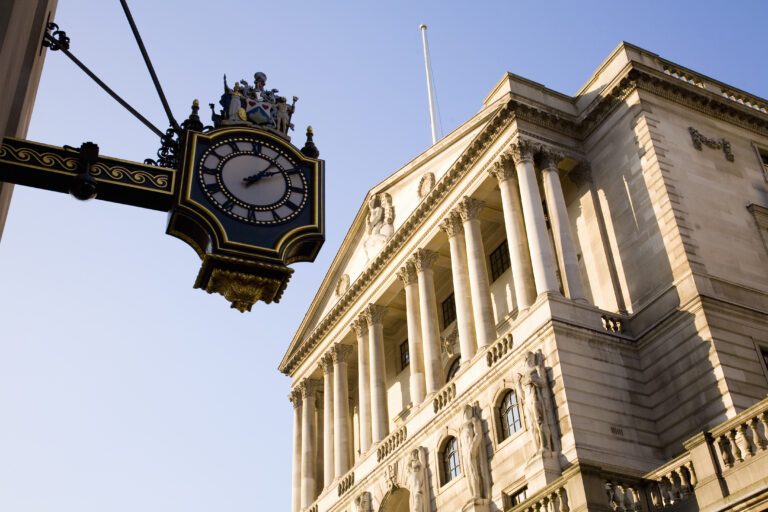
The Bank of England (BoE) raised Bank Rate from 3.75% to 4% last week, marking the first increase since August 2023. All members of the Monetary Policy Committee (MPC) voted in favour of the uplift, with eight backing the 0.25% increase, while one member wanted an increase of 0.5% to 4.25%.
Governor of the BoE, Andrew Bailey, cited the ongoing conflict in the Middle East as the main reason for the increase. Rising energy prices continue to put pressure on inflation, which reached 3.5% in September and is predicted to reach around 5% in the middle of next year. Considering this, nine months into the conflict in Iran, Bailey said that, “there is now enough inflationary pressure in the pipeline… that an increase in Bank Rate is warranted.”
The increase was in line with industry expectations, as a Reuters poll ahead of the MPC meeting found that economists were expecting a rise of 0.25%. There is already speculation about further increases, as some BoE policymakers suggest that additional hikes may be necessary if the war continues.
Alpesh Paleja, Confederation of British Industry Deputy Chief Economist, commented, “The question now is where the Committee goes from here. Persistently high inflation means another rate rise cannot be ruled out… Either way, households and businesses face higher borrowing costs in the near term. That is a bitter pill to swallow, but one the MPC will see as necessary to prevent a more prolonged inflation shock and lasting damage to living standards.”
The Democrats secured a landslide victory in the US midterm elections last week, in a vote that has shaken up the US political landscape. The Democrats won both the US Senate and House of Representatives to take back control of Congress from the Republicans from January, for the remainder of Donald Trump’s presidency. The Republicans lost many safe seats in the vote, with Kansas electing its first Democratic senator since 1932 and Texas turning blue for the first time since 1988.
US stocks initially soared after the election, adding $1.2tn in market cap on their first day of trading after the midterms. However, the Democrat win sparked concerns over a reduction in AI development, causing tech stocks to plummet worldwide last week, but they have since shown signs of a partial recovery.
In October, the UK services sector expanded at the fastest rate since February, according to S&P Global. The Business Activity Index rose to 52.8 in October, marking four months of consecutive increases. While it is positive that growth hit an eight-month high, October’s reading is still below the long-term average of 54.2. The growth in business activity is mainly attributed to improving customer demand and increased order books, with AI investment spending contributing to greater sales. Total new work increased at the fastest pace since January, largely driven by domestic demand. Average cost burdens increased sharply, with 38% of the survey panel noting an increase in their input prices and only 1% seeing a decline.
Tim Moore, Economics Director at S&P Global Market Intelligence, commented, “October data highlighted a combination of faster output growth and stronger price pressures across the UK service economy, mirroring trends in the manufacturing sector.”
A survey by YouGov has offered an insight into UK households’ financial outlook following the Budget. The research found that 53% are expecting their financial situation to get worse in the next 12 months, with only 11% anticipating an improvement. Also, a quarter (26%) of UK adults are considering reducing their household spending as a direct result of the Budget.
Women appear to be particularly uncertain about the year ahead, with 55% expecting their financial situation to worsen. Plus, the research found that the Budget has prompted some people to rethink their money management – 13% are potentially reviewing their ISA or other tax-efficient savings arrangements and 9% are reassessing the balance between investments and cash savings.
The uncertainty about finances extends to retirement, with only 25% of respondents feeling confident that they will be able to afford a good standard of living when they stop working.
The value of investments can go down as well as up and you may not get back the full amount you invested. The past is not a guide to future performance and past performance may not necessarily be repeated. All details are correct at time of writing
All details are correct at time of writing (11 November 2026)
